

At a modern sawmill, a grading scanner is no longer news but a given. Competitive advantage no longer comes from having a scanner on the line, but from how intelligently that scanner analyses the raw material and how it communicates with the rest of the process. A traditional "heuristic" scanner based on rigid rules and inadequate optimisation is the sawmill's most expensive employee.
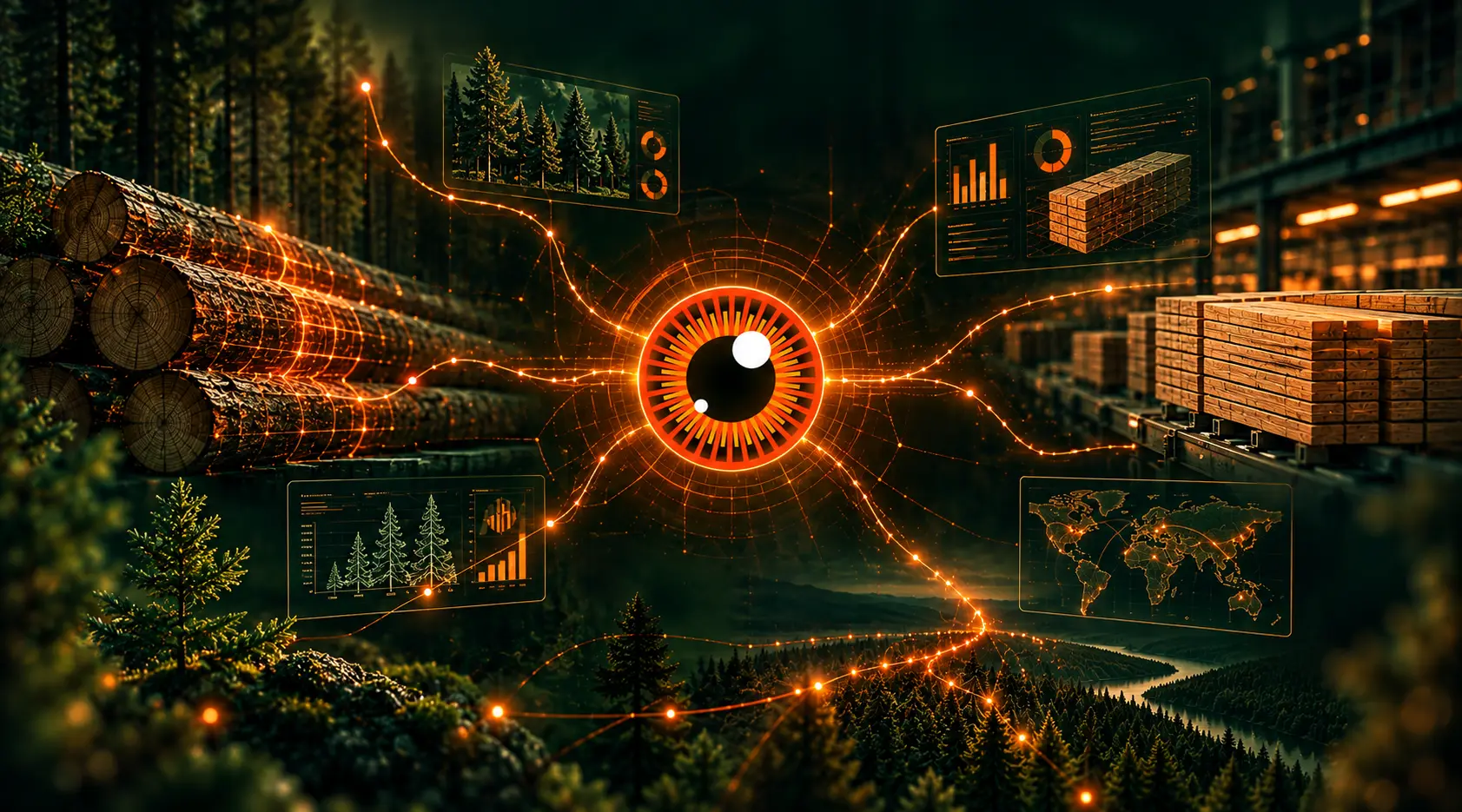
Finnos offers a solution that covers the entire production chain from log reception to finished sawn timber, turning raw material into data and data directly into bottom-line results.
Everything begins with log scanning. If grading is done incorrectly at the start, the error multiplies through the entire downstream process. Fusion does not settle for one measurement technology but combines X-ray, 3D laser measurement and RGB data into a single seamless decision-making engine.
When three different sensor technologies are fused, the blind spots typical of traditional scanners are eliminated. Fusion sees the log's external shape, surface and internal structure simultaneously. This multi-sensor approach ensures that each log is directed to its optimal use with millimetre precision, maximising value yield from the very first process step.
Once the log has been sawn, quality assurance passes to the Board Scanner. Many sawmills already have some kind of board scanner in use, but it often suffers from "silent waste". An inaccurate device is often tuned to grade on the safe side, producing over-quality and trimming far more than necessary. This is a direct financial loss.
The Board Scanner guarantees a value yield of over 96%:
Where traditional CT solutions bring three-dimensional visibility, Neuro CT takes the technology to a new level by combining computed tomography and machine learning. It is a platform that turns log sorting and optimisation into virtual board grading before a single cut is made.
Neuro CT uses patented neural network based (AI) technology. The result is faster and smarter optimisation of how logs are used.
The unique advantages of Neuro CT:
In a world where the price of raw material is rising, a sawmill's profitability depends on its ability to squeeze maximum value from every log. The Finnos ecosystem of Fusion, Board Scanner and Neuro CT forms a whole in which decisions are based on mathematical certainty, not on human interpretation or the assumptions of outdated technology.
👉 Want to upgrade your sawmill's intelligence for 2026? Get in touch!
Tukkikatu 5
53900 Lappeenranta
2026 © Finnos Oy | All rights reserved | by developit // creative